Wholesale Buying
Understanding FMCG Wholesale Minimum Order Quantities
Why minimums are set per SKU rather than per catalogue, how carton and pallet quantities work, and how mixed shipments change what is achievable.
4 min read
There is no single MOQ
Buyers frequently ask for "the MOQ" as if a supplier had one. In FMCG wholesale that figure does not exist, because the minimum is a property of the product and its packaging, not of the supplier.
A carton of concentrated detergent and a carton of crisps occupy very different space and weight for the same carton count. A minimum that suits one is meaningless for the other. Anyone quoting a single catalogue-wide minimum is either simplifying heavily or describing a shipment minimum rather than a product one.
The levels a minimum can sit at
| Level | What it means |
|---|---|
| Carton | The smallest sellable unit. Wholesale is not sold in loose consumer units. |
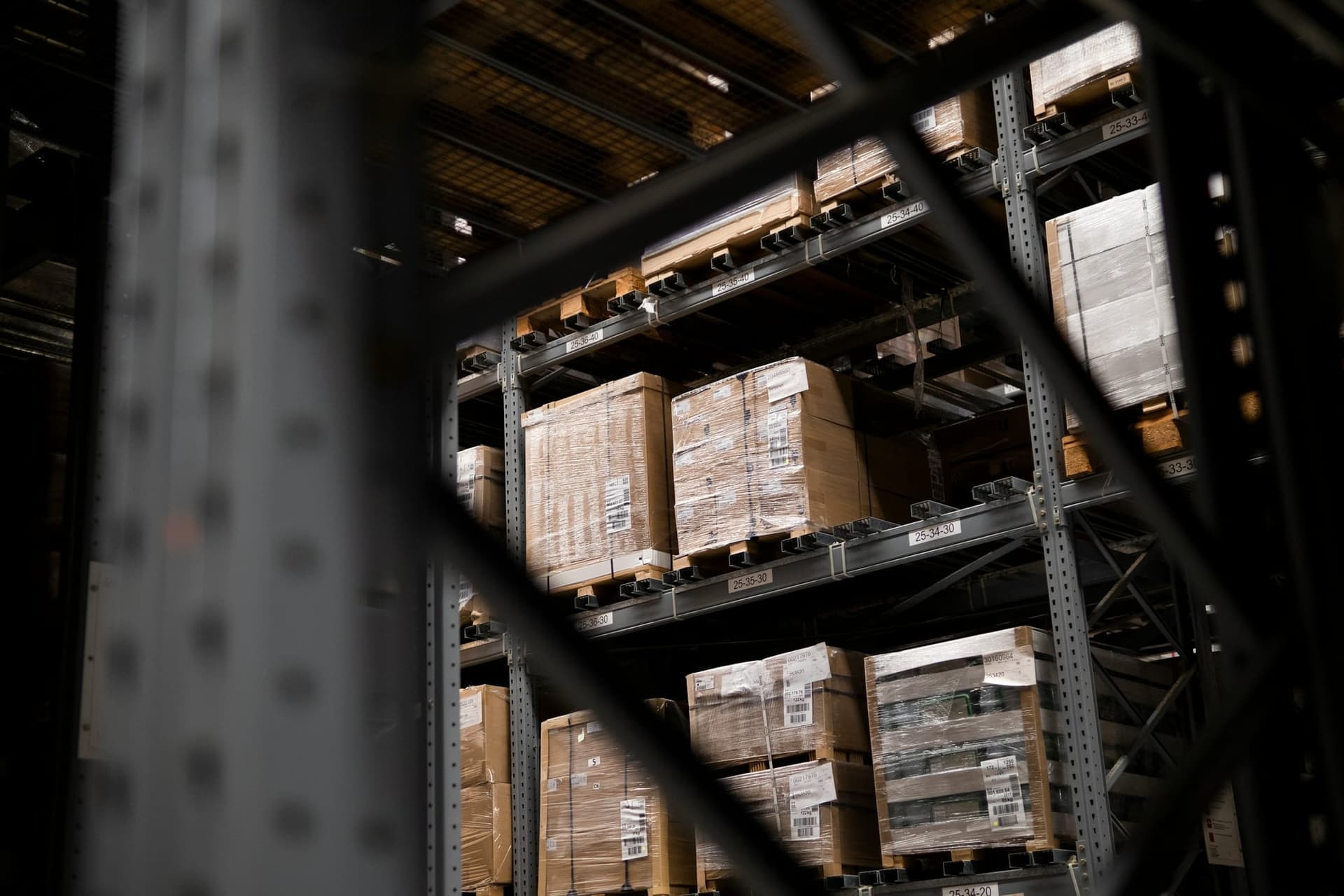
| Layer | A complete layer of cartons on a pallet — sometimes the practical minimum for bulky lines. |
| Pallet | A full pallet of one SKU. Common for high-turnover lines. |
| Shipment | A minimum for the order as a whole, independent of any single line. |
These stack. A line might have a carton-level minimum while the shipment as a whole still needs to reach a viable size to be worth moving.
How mixed shipments change it
This is the part that matters most for buyers building an assortment. If every line had to reach a full pallet, a broad range would require an enormous order. Consolidation is what makes a wide assortment reachable: individual lines are taken in carton or layer quantities, and the shipment as a whole reaches a size that makes commercial sense.
In practice that means the useful question is not "what is the MOQ for this product" but "can this assortment, at these quantities, be shipped to this destination". The answer accounts for all the lines together.
Full-load economics
The reason minimums exist at all is that handling and freight have fixed components. Picking, consolidating, documenting and shipping an order costs roughly the same whether it is small or large, so very small orders carry a disproportionate share of those costs.
That is also why the same assortment gets a better unit cost at container scale — the fixed costs are spread across far more cartons.
Why minimums differ so much between categories
Two products can share a price and a carton count and still carry very different minimums, because the constraint is rarely the product itself.
| What drives it | Effect on the minimum |
|---|---|
| Carton size and weight | Bulky or heavy cartons reach a pallet sooner, raising the practical minimum |
| How the line is supplied | Lines held in stock can move in smaller quantities than lines brought in to order |
| Shelf life | Short-life products are held in tighter quantities, which limits what can be released at once |
| Pack format | The same brand in two formats can behave like two different products |
| Turnover | Fast-moving lines are replenished often and are usually more flexible |
This is why a minimum quoted for one line tells you little about the next one, even within the same brand.
Minimum quantity is not minimum value
Two different limits get talked about as though they were one. A minimum order quantity is expressed in cartons or pallets of a product. A minimum order value applies to the order as a whole, in currency, regardless of what it contains.
They interact in a way that catches buyers out. An assortment can satisfy every per-line quantity and still fall short as an order, or clear a value threshold comfortably while one line remains below its carton minimum. Both need to work before a shipment can be planned, which is another reason the useful question is about the whole list rather than one product.
Where there is flexibility, and where there is not
Some minimums are hard physical facts. A carton cannot be split without breaking a manufacturer’s pack, so that floor does not move. Others are commercial, and commercial limits respond to context.
- Accepting mixed variants instead of a single flavour or scent often unlocks a smaller quantity per variant
- Committing to a repeating programme changes what is worth reserving for you
- Combining a difficult line with a larger, straightforward order can make it viable
- Flexibility on pack format sometimes reaches stock that the exact format cannot
The way to find out is to send the list with the quantities you actually want and ask what is achievable — not to guess a minimum and pre-emptively order up to it.
Check minimums for your list
Send the products and quantities you want. We will confirm what is achievable per line and as a shipment.