Export service
European FMCG Distribution
How supply actually works inside Europe: road freight, pallet formats, delivery booking and intra-community VAT.
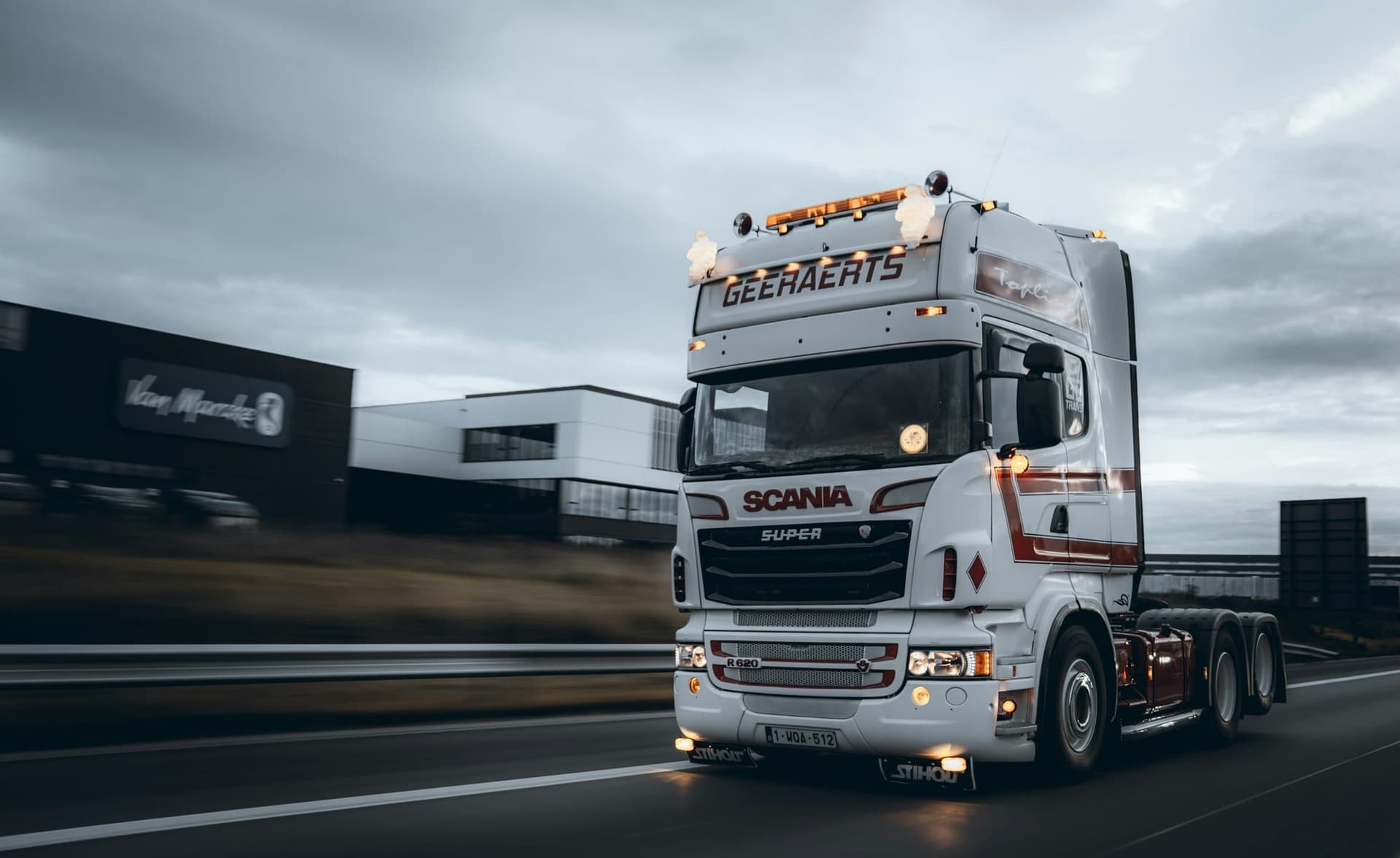
Road changes the shape of an order
Supplying a European buyer is not a smaller version of exporting. The unit is the pallet rather than the container, there is no customs clearance between member states, and a delivery is measured in days rather than weeks. That lets a buyer reorder against real demand instead of committing to a load that has to last a quarter.
The practical consequence is that stock cover can run tighter. A buyer who would hold eight weeks of an imported line can often hold considerably less of the same line supplied by road, which frees working capital that a container programme ties up.
Groupage or a dedicated load
Two ways a European order moves, and the choice is usually decided by volume rather than preference.
| Groupage | Dedicated load | |
|---|---|---|
| What it is | Your pallets share a vehicle with other consignments | The vehicle carries your consignment only |
| Suits | A few pallets | Most of a trailer |
| Transit | Longer — the vehicle serves several drops | Direct |
| Handling | Pallets are transhipped at least once | Loaded once, unloaded once |
Groupage is the normal starting point and is entirely routine, but pallets are handled more, so wrapping and labelling matter more. Fragile or top-heavy assortments are worth flagging when you order rather than after a claim.
Pallet standards and what your warehouse needs
Two footprints dominate European trade: the EUR/EPAL pallet at 1200 x 800 mm and the industrial pallet at 1200 x 1000 mm. Neither is better in the abstract, but many receiving operations are set up for one of them — racking depth, handling equipment and any pallet-exchange arrangement all assume a footprint.
- Tell us which footprint your operation requires, with the order rather than after despatch
- Say whether your site operates pallet exchange, and on what terms
- Flag any maximum pallet height your racking or your doors impose
- Tell us if you need pallets labelled to a particular scheme for your inbound scanning
Delivery, booking and receiving
Most delays on European road movements happen at the receiving end rather than in transit. A site that requires a booked delivery slot, has restricted access, or cannot take a full-height trailer will hold a vehicle, and that cost lands somewhere.
- Whether the delivery address requires a booking, and how far ahead
- Access restrictions — vehicle length, tail-lift requirement, forklift availability on site
- Receiving hours, and whether the site closes for a period
- Who signs, and what proof of delivery you need back
Road movements travel under a CMR consignment note, which is prepared with the consignment and evidences the contract of carriage. It is also what a claim is assessed against, so the condition noted on delivery matters.
Intra-community supply and VAT
A movement between EU member states is an intra-community supply, not an export: no customs clearance at the border and no import duty. What replaces the customs paperwork is VAT handling — a valid intra-community VAT number on both sides, and the reverse-charge treatment that follows from it.
We confirm the treatment that applies to your order at quotation stage. Where a VAT number cannot be validated, the treatment changes, so it is worth checking yours is active for intra-community transactions before ordering rather than discovering it on an invoice.
Terms used on road movements
Road supply within Europe generally uses a narrower set of Incoterms than sea freight. EXW leaves collection with you, FCA hands over to your carrier at an agreed point, and DAP delivers to your address. DAP is the most common request and the one most often misread: it does not mean duty paid, which matters as soon as the destination is outside the union.
Common questions
- Can I order a single pallet?
- Often, yes — groupage exists for exactly that. Whether it works commercially depends on the destination and the assortment, since freight per carton rises sharply on small consignments. Send the list and the delivery country and we will tell you honestly whether the quantity makes sense.
- Do you deliver on EUR pallets?
- Tell us what your operation needs. Pallet footprint affects how many cartons travel, so it is confirmed at quotation rather than assumed — and if your site operates pallet exchange, say so on the order.
- Is there customs clearance on an EU delivery?
- No, for movements between EU member states. Those are intra-community supplies with no clearance and no import duty; what is needed is a valid intra-community VAT number on both sides. Destinations outside the EU customs territory are exports and clear normally.
- How far ahead should I order?
- It depends on the lines and current stock position, so we confirm it against your actual list rather than publishing a lead time. Road is considerably faster than sea freight, which is the main reason European buyers can hold less cover.
Request a European supply quotation
Send your assortment, volumes and delivery country. We will confirm availability, pallet configuration and how it would move.